Glow Glass
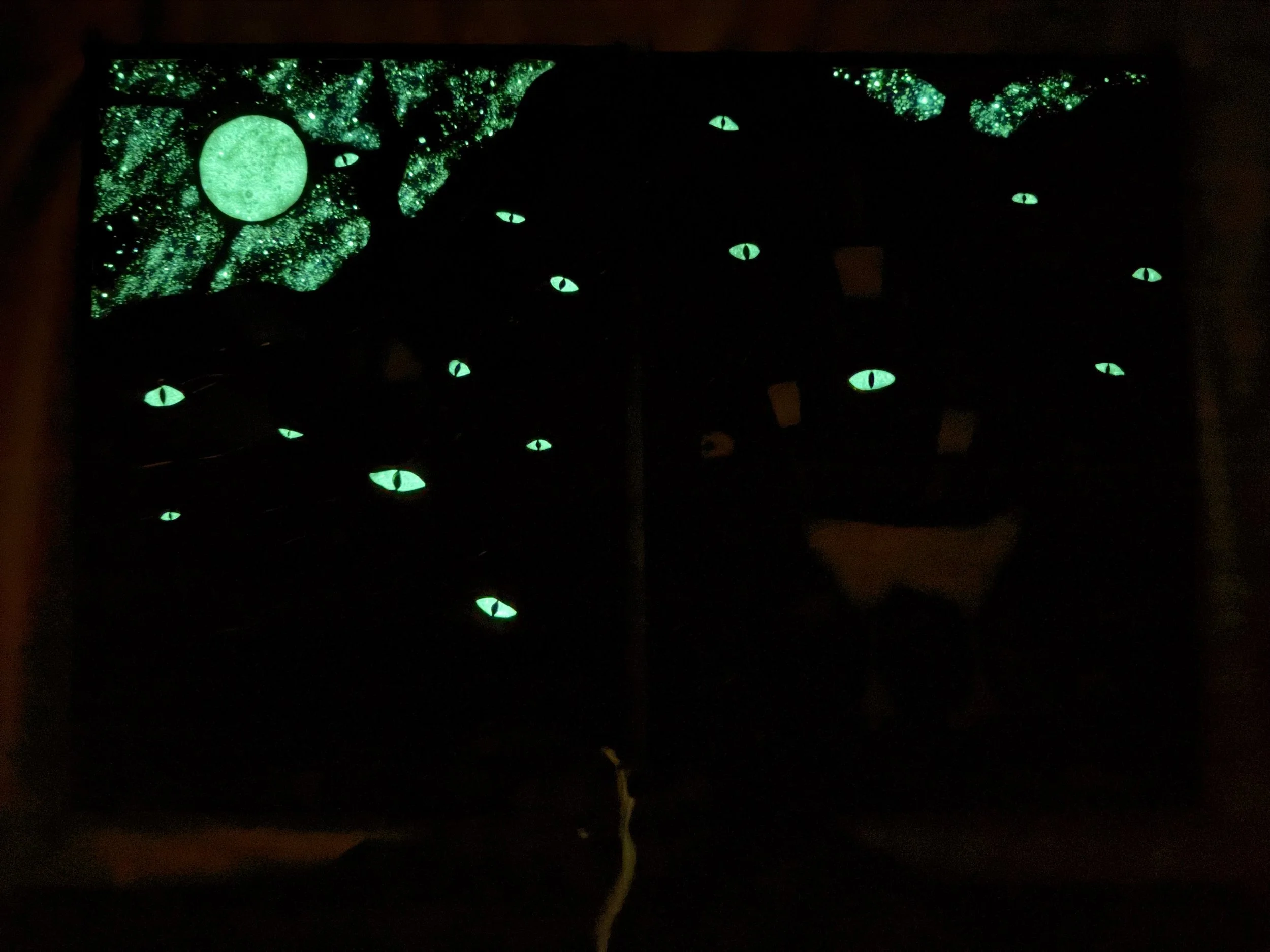
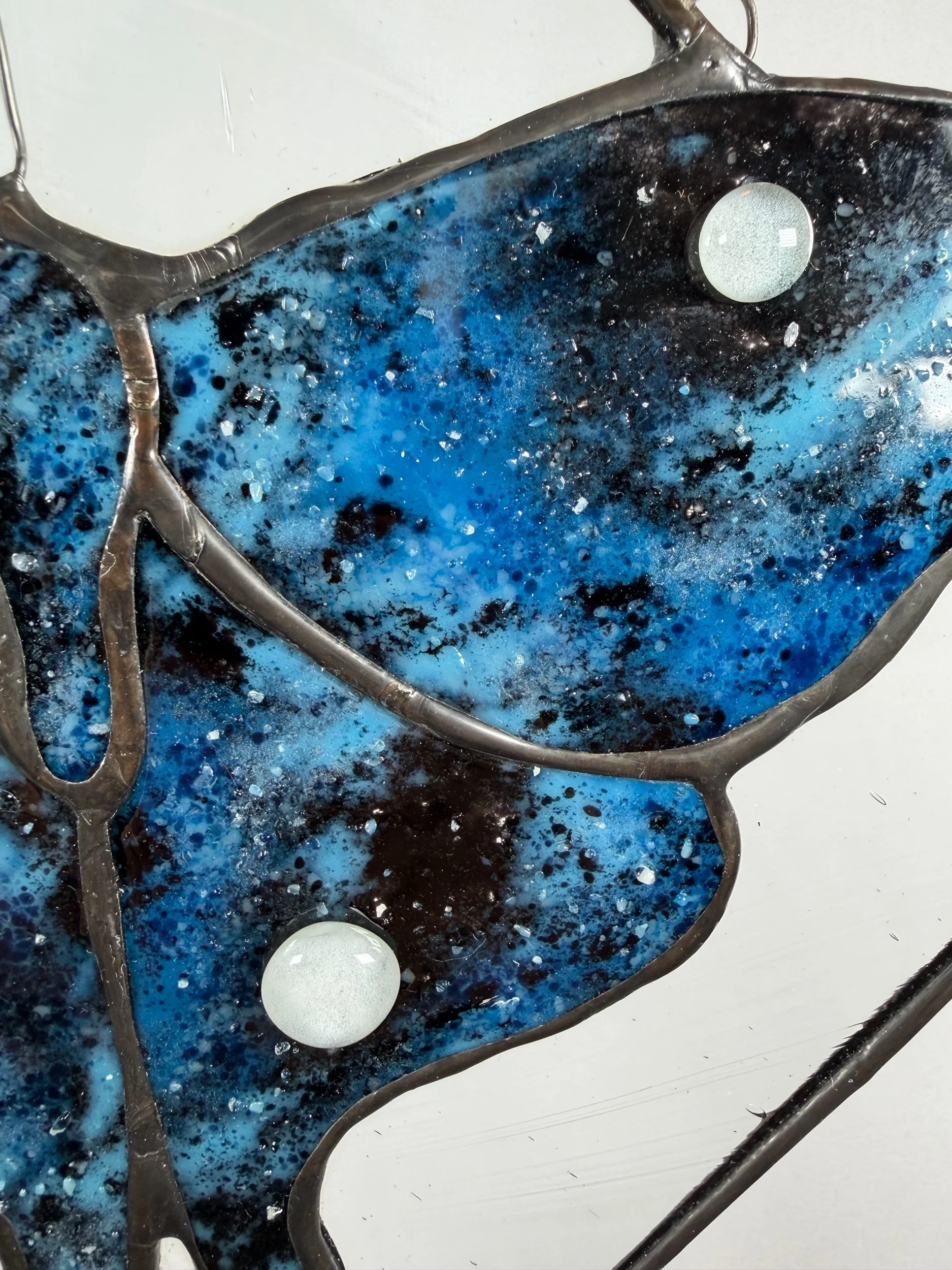
Art that changes when the lights go out.
Some of my work incorporates specialty phosphorescent glass and glass frit alongside traditional stained and fused glass. This glow-in-the-dark glass contains strontium aluminate, a long-lasting phosphorescent material that absorbs energy from light and gradually releases it again as a visible glow.
I source these materials and incorporate them into my own fused-glass designs, arranging and kiln-fusing to create custom elements that are integrated into my artwork as part of my larger exploration of light, color, and how an artwork can transform under different viewing conditions.
HOW DOES GLOW GLASS WORK?
Strontium aluminate is a persistent luminescent material. When exposed to suitable light, it absorbs energy, some of which becomes temporarily trapped within the material. After the light source is removed, that energy is gradually released as visible light, creating the long-lasting afterglow we recognize as "glow in the dark."
Once the glow fades, simply expose the artwork to light again to recharge it.
HOW DO I CHARGE IT?
Not all light sources charge glow glass equally. The type of light, its intensity, its distance from the artwork, and the length of exposure can all affect the resulting glow.
UV / BLACKLIGHT
For the fastest and most dramatic charge, use a UV or blacklight. Strontium aluminate responds particularly well to ultraviolet light, making UV an effective way to quickly charge the phosphorescent elements and experience a strong initial glow.
SUNLIGHT
Sunlight is also an excellent charging source. Artwork displayed where it receives natural light may charge throughout the day and begin revealing its phosphorescent elements as its surroundings become darker.
INDOOR LIGHTING
Bright artificial lighting can also charge the glass, but results will vary depending on the light source. A dim indoor light several feet away may not produce the same brightness or glow duration as direct sunlight or a nearby UV light.
For the strongest glow, give the artwork a good charge with sunlight or UV/blacklight before viewing it in darkness.
HOW LONG DOES IT GLOW?
When fully charged, the strontium-aluminate glow material used in my work can produce an afterglow for up to approximately 10 hours under appropriate conditions.
However, this does not mean the glass remains at its initial brightness for 10 hours.
The glow is strongest immediately after charging and gradually becomes softer as the stored energy is released. Over time, the glow may become subtle enough that it is easiest to see once your eyes have adjusted to darkness.
The glow doesn't "run out" permanently. Simply expose the artwork to light again to begin another glow cycle.
WHAT AFFECTS THE GLOW?
The brightness and duration of the glow can vary depending on:
the type of light used to charge the glass
the intensity of the charging light
the color of the glow glass
the distance between the light and the artwork
how long the artwork is exposed to light
the amount and color of glow glass incorporated into the artwork
the darkness of the viewing environment
how well your eyes have adjusted to the dark
Because glow glass is incorporated differently into each artwork, the appearance and intensity of the effect may also vary from piece to piece.
LIGHT IS PART OF THE ARTWORK.
Stained glass has always had a relationship with light. Traditionally, that relationship depends on light passing through the glass.
My work asks another question:
What happens when that light disappears?
By combining traditional stained glass with fused, UV-reactive, and phosphorescent glass, I create pieces that can reveal different elements as their lighting environment changes.
A single piece may have one appearance in daylight, another under ultraviolet light, and another after the lights go out.
In these works, light isn't simply illuminating the artwork.
Light becomes one of its materials.